Vegan Dairy Swaps May Cause Iodine Deficiency in Youth
New research warns that replacing cow's milk with unfortified plant-based alternatives could lead to critical nutrient gaps, especially iodine.
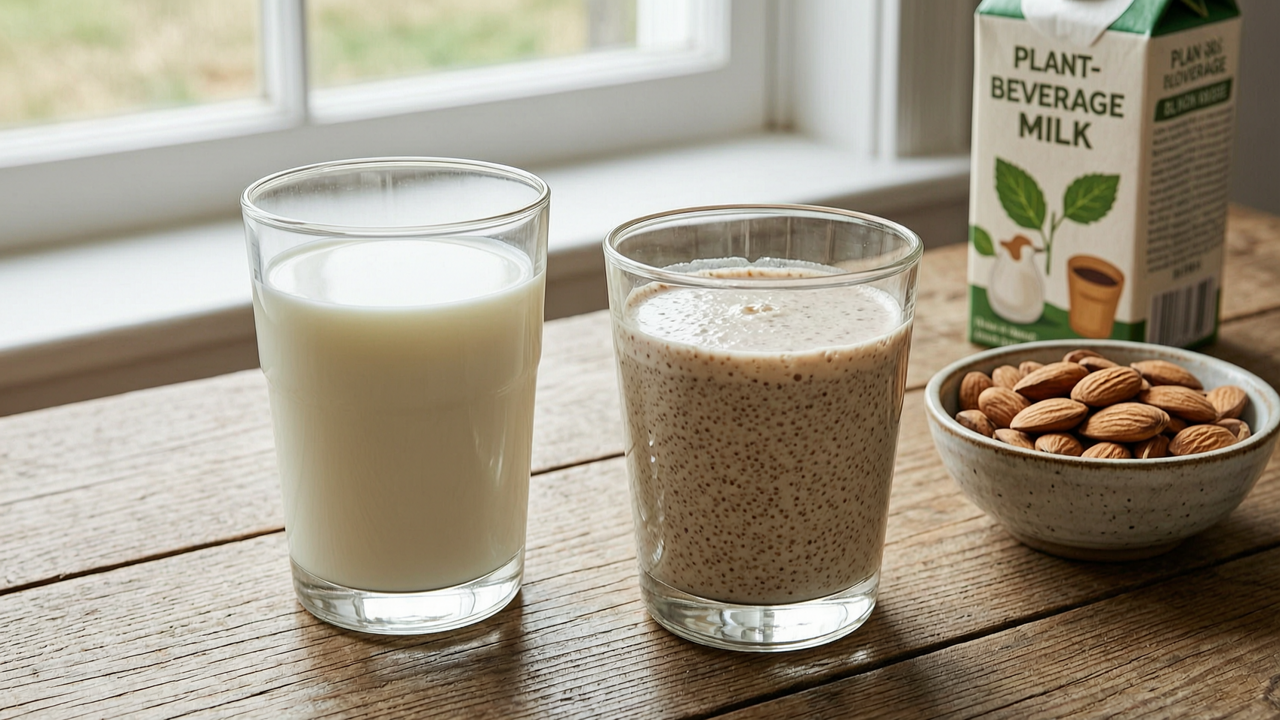
A new study published in Lancet Planetary Health highlights a growing nutritional risk for young people and women who switch from dairy products to plant-based alternatives. Researchers warn that without proper fortification, these substitutes can lead to significant deficiencies in vital micronutrients, particularly iodine, which is essential for thyroid function and brain development.
The investigation focused on the UK market, analyzing 146 non-dairy milks, 76 yoghurts, and 67 cheeses. While many plant-based options are enriched with calcium and vitamin B12, the data reveals a stark gap in other areas. Only 19% of the surveyed products were fortified with riboflavin, and a mere 12% contained added iodine.
Iodine plays a crucial role in producing hormones that regulate metabolism and support healthy growth. In the UK, children obtain approximately half of their total iodine intake from dairy, while adults get about a third. Because there is no formal requirement for vegan alternatives to be fortified with this trace element, shifting diets without careful selection can result in inadequate consumption levels.
Scientists used modeling based on typical market fortification levels to predict the impact of dietary changes. The results indicate that replacing just one-fifth to one-third of dairy intake with plant-based alternatives would cause the prevalence of iodine deficiency among adolescent girls to rise from 54% to 65%. For women aged 19 to 49, the rate would increase from 32% to 42%.
The risks become even more pronounced with a complete transition. If individuals switch entirely to non-dairy alternatives, inadequate iodine levels could reach 80% in teenage girls and 72% in teenage boys. Dr. Sarah Bath, an associate professor in public health nutrition at the University of Surrey, noted that young women and those of childbearing age are the most vulnerable groups due to their specific physiological needs during key life stages.
To mitigate these risks, the study suggests that mandating fortification for all non-dairy alternatives with iodine would prevent average declines in population intake. Additionally, the model showed that adding iodized salt to bread helped reduce the proportion of teenage girls with insufficient iodine in simulated scenarios. These findings underscore the importance of regulatory measures or industry standards to ensure nutritional adequacy.
Industry leaders have responded by emphasizing their existing fortification practices. Niamh Brannelly from Danone’s Alpro brand stated that their core range includes iodine, calcium, and vitamins B2 and B12. Similarly, Caroline Orfila Jenkins of Oatly confirmed that their unflavored, non-organic oat drinks are fortified with iodine, calcium, riboflavin, and vitamins B12 and D, arguing that appropriate fortification is vital as diets become more plant-based.
Experts advise consumers to read labels carefully when making substitutions. Nichola Ludlam-Raine, a registered dietitian, recommended choosing fortified options like Alpro and avoiding organic drinks, which typically lack added nutrients. She also suggested that white fish such as cod or haddock, eggs, and fermented dairy products like kefir can contribute to iodine intake, while cautioning against relying on seaweed supplements due to inconsistent and potentially excessive iodine content.
“New research warns that replacing cow's milk with unfortified plant-based alternatives could lead to critical nutrient gaps, especially iodine.”
Sources
Reporting informed by Guardian Science. This story was written by the Glob News Desk based on verified reporting and independently reviewed before publishing.
Written by
Glob News Desk
AI-assisted editorial team
Stories researched and drafted with AI assistance from verified news sources, then reviewed by a human editor before publishing.
Spotted an error, or have something to say about this story?
Tell the newsroom
Read next
Lab-Grown Meat: The Promise vs. Reality
A decade after the first lab-grown burger, cellular agriculture struggles with high costs and regulatory hurdles despite early climate promises.
2 min read
The Weekly Globe
One email a week with the most-read stories. Unsubscribe anytime.
Related stories
ScienceLab-Grown Meat: The Promise vs. Reality
 Science
Stonehenge Altar Stone Origin Mystery Deepens as New Theory Ruled Out
 Science
Comments
0Join the conversation — sign in to post a comment.