Stonehenge Altar Stone Origin Mystery Deepens as New Theory Ruled Out
Geologists rule out north-east Scotland as the source of Stonehenge's altar stone, narrowing the search to northern England or Ireland.
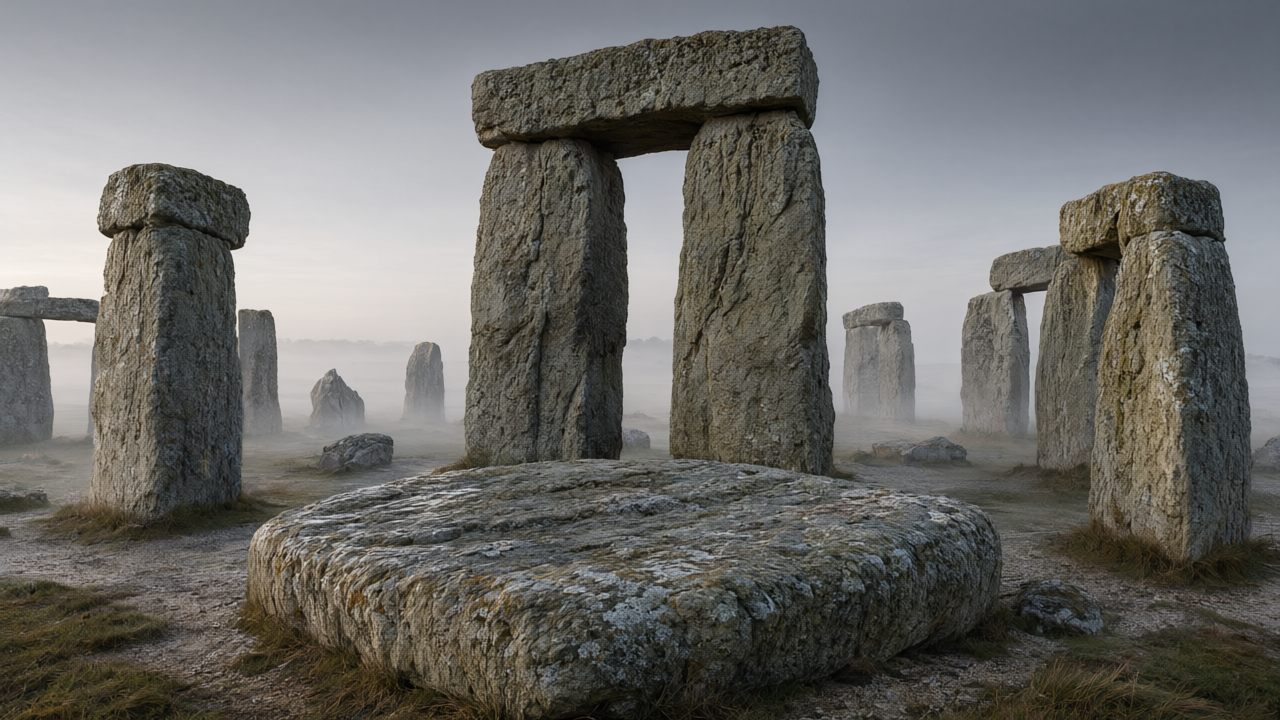
A major scientific effort to trace the origins of one of Stonehenge’s most enigmatic features has hit a dead end, ruling out a previously leading theory about where the monument's altar stone came from. Geologists have concluded that the six-tonne sandstone slab likely did not originate in north-east Scotland, a hypothesis that had captivated archaeologists and the public alike since 2024.
The altar stone, positioned at the center of the prehistoric circle, has long puzzled researchers due to its distance from the main site. In 2024, specialists from universities in London, Wales, and Australia analyzed grains of sandstone from the slab and hypothesized it came from north-east Scotland, more than 400 miles away. The discovery was described as "jaw-dropping" by team members, sparking intense speculation about how Neolithic people transported such a massive rock and what long-distance relationships existed across Britain at the time.
However, a new comprehensive study led by Duncan Pirrie, emeritus professor at the University of South Wales, has cast significant doubt on this conclusion. By combining precise compositional analysis with non-invasive examinations of the stone in situ and tests on eight museum fragments, the team built a detailed geological profile of the altar stone. This data was then used to search for matching outcrops in north-east Scotland.
Nick Pearce, an emeritus professor of geochemistry at Aberystwyth University, described the fieldwork as searching for a needle in a haystack. His team spent countless hours on weather-battered Scottish hills, braving storms to collect approximately 70 samples from thousands of square kilometers of terrain. Despite the rigorous effort, laboratory testing suggested it is highly unlikely the altar stone originated in this region.
"We’re getting closer," said Pearce. "In a geological detective story such as this, ruling out potential source areas is just as important as identifying new ones. Every location eliminated narrows the search and brings us closer to discovering where the altar stone originated." He noted that while the mystery remains unsolved, the process of elimination is a critical part of the scientific method.
Duncan Pirrie, who led the study, stated that the stone also definitely did not come from southern Britain. With north-east Scotland and southern Britain effectively ruled out, the search has shifted toward other potential sources. The remaining plausible origins now include other parts of Scotland, northern England, or potentially even Ireland.
"This is the most comprehensive geological investigation of the altar stone ever undertaken," Pirrie said. "By combining a wide range of analytical techniques, we have built the clearest picture yet of the stone’s composition and tested the leading theories about its origins. So far, none of the locations examined have the same set of characteristics as the altar stone, but the search is not over."
Experts outside the study emphasize the cultural significance of solving this puzzle. Mike Pitts, a renowned Stonehenge expert not involved in the research, noted that determining the stone's origin would help reconstruct the worldview of the people who moved it. "Doing so would greatly help fit the altar stone into the world of the people who moved it," Pitts said. "We’d get to see the landscape through their eyes. To know exactly where the journey began."
As the investigation continues, the altar stone remains a silent witness to ancient engineering and social networks. While the wind-whipped geologists may have been looking in the wrong spot, their work has significantly narrowed the geographic scope, bringing historians and scientists one step closer to understanding the complex journeys of Neolithic Britain.
“Geologists rule out north-east Scotland as the source of Stonehenge's altar stone, narrowing the search to northern England or Ireland.”
Sources
Reporting informed by Guardian Science. This story was written by the Glob News Desk based on verified reporting and independently reviewed before publishing.
Written by
Glob News Desk
AI-assisted editorial team
Stories researched and drafted with AI assistance from verified news sources, then reviewed by a human editor before publishing.
Spotted an error, or have something to say about this story?
Tell the newsroom
Read next
Lab-Grown Meat: The Promise vs. Reality
A decade after the first lab-grown burger, cellular agriculture struggles with high costs and regulatory hurdles despite early climate promises.
2 min read
The Weekly Globe
One email a week with the most-read stories. Unsubscribe anytime.
Related stories
ScienceLab-Grown Meat: The Promise vs. Reality
 Science
Vegan Dairy Swaps May Cause Iodine Deficiency in Youth
 Science
Comments
0Join the conversation — sign in to post a comment.