Seabirds Suffer Jet Lag When Migrating
Oxford study reveals Manx shearwaters get lost during migration because their internal clocks fall out of sync with local time zones.
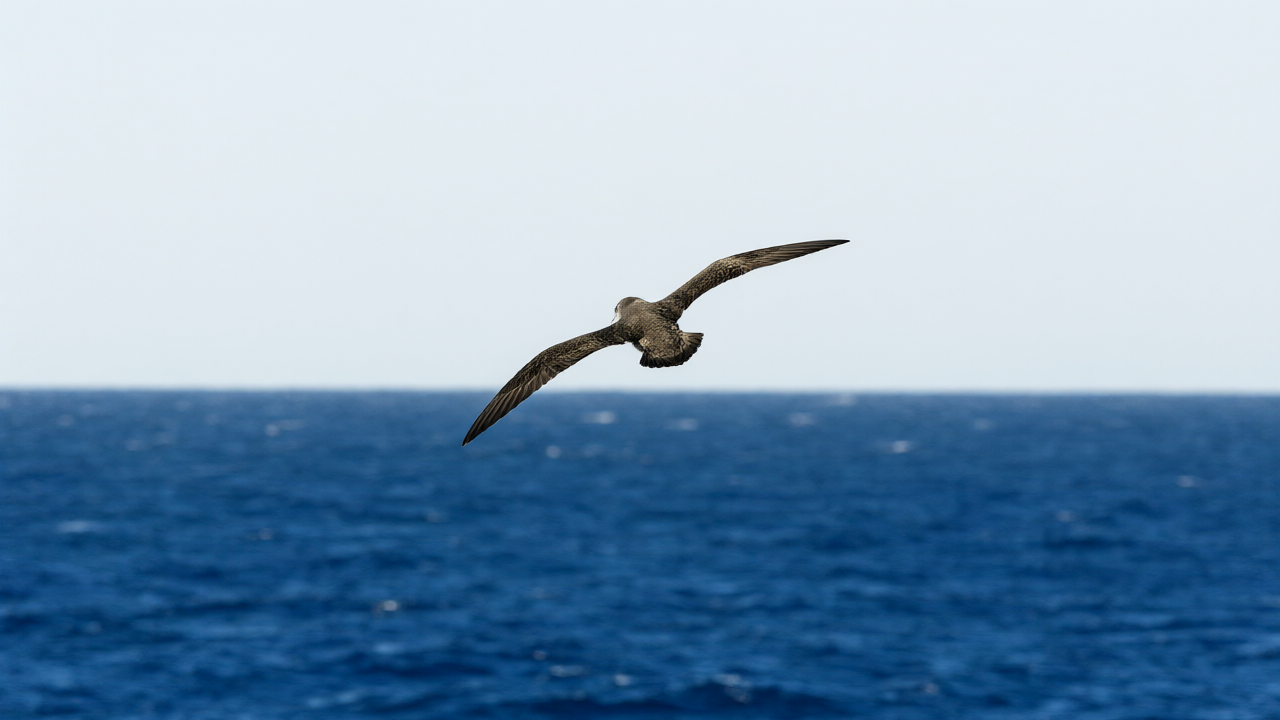
Seabirds returning from foraging trips can be thrown hundreds of miles off course by a form of jet lag that arises when their body clocks get out of sync with local time, researchers say.
Tracking data from Manx shearwaters on the west coast of the UK revealed that when the birds returned home to their colonies after trips over the Atlantic, their rapid eastward flights disrupted their sense of time and navigation.
The impact was limited on adult shearwaters because the birds were able to correct their bearings in flight. At most, the birds veered off course by about 15 degrees. After correcting their course, this added only an estimated 3 miles to a 600-mile journey.
But less experienced birds were likely to have a tougher time, the study found, with first-time foragers at risk of flying off course by hundreds of miles.
Most studies on birds’ biological clocks have been conducted under laboratory conditions but Dr Patrick Lewin, a behavioural and sensory ecologist at the University of Oxford, set out to investigate wild birds with the help of his colleagues.
Their analysis of 20 years of GPS tracking data revealed a clear effect when the Manx shearwaters flew east across lines of longitude as they returned home, leading their clocks to run up to an hour or so behind local time. “The bird’s internal clock can be subject to a jet lag phenomenon, manifesting as birds flying off course,” Lewin said.
Like many animals, shearwaters use the sun as a compass. Because the sun moves across the sky as the Earth rotates, reading its position correctly relies on the birds adjusting their heading relative to the sun, using their body clock to keep track of the time of day. Sunset and sunrise keep the bird’s body clock in sync, helping them adjust to changes in local time.
Writing in Science, Lewin said the mismatch between local time and the birds’ internal clocks could make them drift off course when the sun lay farther around the sky than expected. Surprisingly, the errors remained when birds followed the coastline, where landmarks could have guided them, further supporting the idea that the sun plays a central role in anchoring their sense of direction.
For adult shearwaters, this lag has very limited impact on their overall journey, with errors adding a calculated 5km to a 1,000km journey,” Lewin said. “However, for first-time migrant birds, such orientation shifts due to sun compass errors could result in deviations of hundreds of kilometres as they lack a map sense to help reorient them when they lose their way.”
“Oxford study reveals Manx shearwaters get lost during migration because their internal clocks fall out of sync with local time zones.”
Sources
Reporting informed by Guardian Science. This story was written by the Glob News Desk based on verified reporting and independently reviewed before publishing.
Written by
Glob News Desk
AI-assisted editorial team
Stories researched and drafted with AI assistance from verified news sources, then reviewed by a human editor before publishing.
Spotted an error, or have something to say about this story?
Tell the newsroom
Read next
AI Unlocks Secrets of Britain's Rarest Bats in Massive Survey
Artificial intelligence enabled the first comprehensive survey of British bats, identifying rare species across hundreds of woodlands.
2 min read
The Weekly Globe
One email a week with the most-read stories. Unsubscribe anytime.
Related stories
ScienceAI Unlocks Secrets of Britain's Rarest Bats in Massive Survey
 Science
Astronauts Deploy New Solar Arrays on ISS in Live Broadcast
 Science
Comments
0Join the conversation — sign in to post a comment.