AI Unlocks Secrets of Britain's Rarest Bats in Massive Survey
Artificial intelligence enabled the first comprehensive survey of British bats, identifying rare species across hundreds of woodlands.
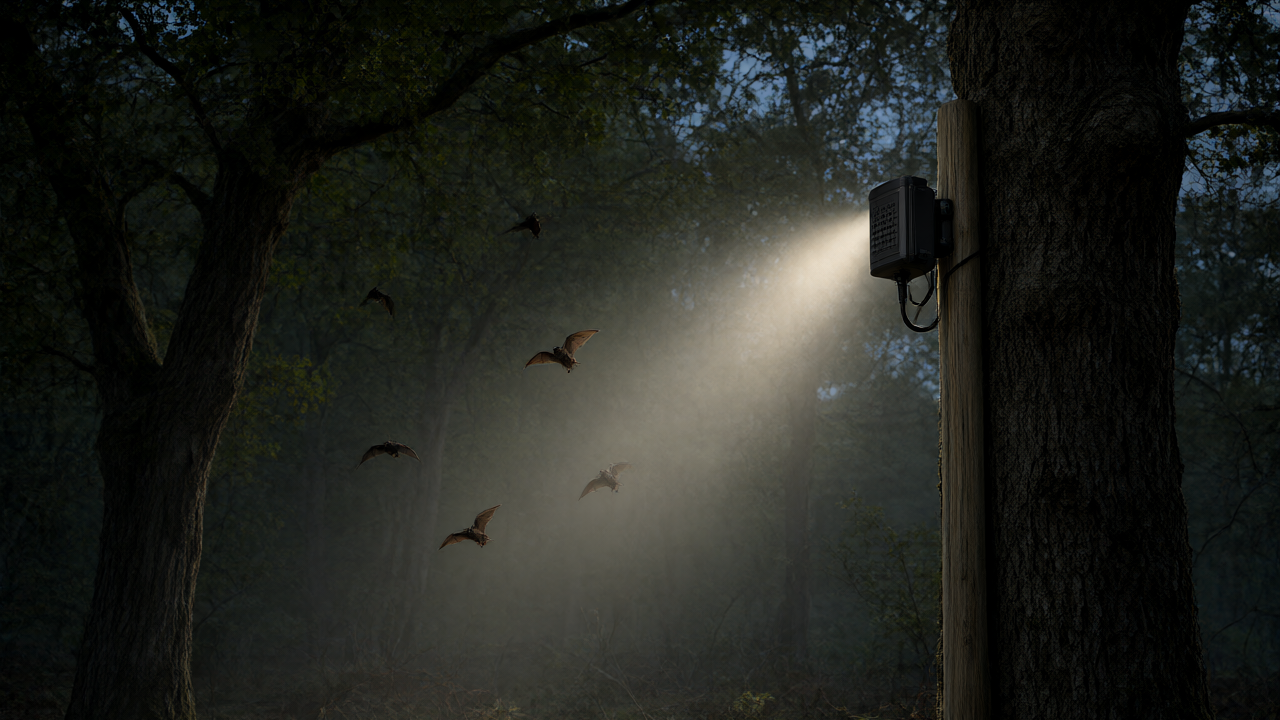
Scientists in the United Kingdom have successfully completed the largest-ever woodland survey of bats, a monumental conservation effort that relied heavily on artificial intelligence to analyze millions of acoustic recordings. The project, which spanned three years and covered 310 woodlands across the country, has provided unprecedented insights into the populations of some of Britain’s most threatened bat species.
Without the use of AI, researchers stated that such a comprehensive survey would simply not have been feasible. The devices left on poles among the trees recorded approximately 98 million bat calls over the three-year period. Analyzing this vast volume of data manually would have taken more than 30 years, highlighting the transformative role of technology in modern ecological monitoring.
The survey identified significant activity among rare and red-listed species, including the elusive Barbastelle bat. These findings were particularly notable in the south-west of England, with hotspots detected in Somerset, Devon, Cornwall, and Dorset. The presence of these sensitive species in these areas offers encouraging news for biodiversity conservationists.
Kate Jones from University College London emphasized the shift in scale that AI has brought to wildlife monitoring. She described the project as a positive example of using technology for environmental good, noting that efficient open-source AI tools allowed the team to identify patterns and flag specific species at a national level. Previously, analyzing such large datasets was beyond human capacity.
Lia Gilmour of the Bat Conservation Trust, which collaborated with Forest Research on the project, called the initiative unprecedented. The team processed 90,000 hours of recording data, a task that would have been impossible to complete by hand. Gilmour expressed excitement over the detection of rare species in Somerset, which is already considered a stronghold for various UK bat species.
The Barbastelle bat, known for roaming ancient forests, has long been challenging to track due to its elusive nature. The new survey has helped map its distribution more accurately, revealing concentrated areas of activity in the south-west. This data will be crucial for tailoring conservation strategies to protect these vulnerable creatures and their habitats.
The success of this survey underscores the growing importance of integrating advanced technology into ecological research. By automating the identification of bat calls, scientists can now monitor wildlife populations more frequently and over larger areas than ever before. This approach not only saves time but also allows for more timely interventions to protect endangered species.
As climate change and habitat loss continue to pose threats to wildlife, tools like AI offer a promising avenue for understanding and mitigating these impacts. The ability to process vast amounts of acoustic data quickly enables researchers to detect changes in bat behavior and population dynamics, providing early warnings of potential declines.
The results of this survey are expected to inform future conservation policies and efforts in the UK. By leveraging AI to unlock the secrets of Britain’s bats, scientists have set a precedent for how technology can aid in the preservation of natural heritage, ensuring that even the most elusive species receive the attention they need to survive.
“Artificial intelligence enabled the first comprehensive survey of British bats, identifying rare species across hundreds of woodlands.”
Sources
Reporting informed by BBC Science. This story was written by the Glob News Desk based on verified reporting and independently reviewed before publishing.
Written by
Glob News Desk
AI-assisted editorial team
Stories researched and drafted with AI assistance from verified news sources, then reviewed by a human editor before publishing.
Spotted an error, or have something to say about this story?
Tell the newsroom
Read next
Seabirds Suffer Jet Lag When Migrating
Oxford study reveals Manx shearwaters get lost during migration because their internal clocks fall out of sync with local time zones.
2 min read
The Weekly Globe
One email a week with the most-read stories. Unsubscribe anytime.
Related stories
ScienceSeabirds Suffer Jet Lag When Migrating
 Science
Astronauts Deploy New Solar Arrays on ISS in Live Broadcast
 Science
Comments
0Join the conversation — sign in to post a comment.