Astronauts Deploy New Solar Arrays on ISS in Live Broadcast
NASA and CSA astronauts successfully installed Roll-Out Solar Arrays on the International Space Station during a live spacewalk.
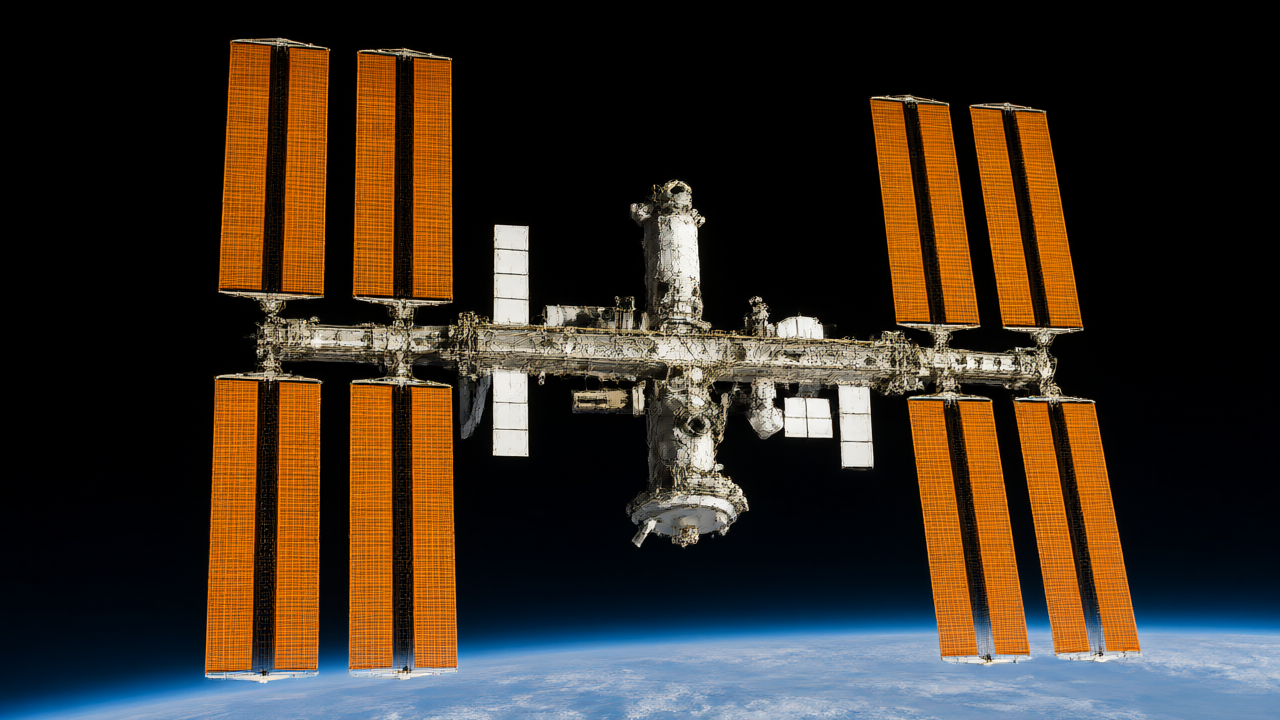
In a significant upgrade to the International Space Station’s infrastructure, NASA astronaut Anil Menon and Canadian Space Agency (CSA) astronaut Joshua Kutryk completed a critical spacewalk to install and deploy new solar arrays. The operation, broadcast live to audiences worldwide, marks a major step in ensuring the orbital laboratory has sufficient energy to support ongoing scientific research and future missions.
The primary objective of the mission was to install and deploy the International Space Station Roll-Out Solar Arrays, or IROSAs. These new arrays are designed to replace older, rigid solar wing structures with more efficient power generation systems. This increase in capacity is vital as the station transitions toward newer modules and experiments that require higher energy loads.
Menon and Kutryk worked outside the pressurized hull for several hours, maneuvering through the complex lattice structure of the station’s truss. They carefully unpacked the compact, rolled-up solar panels from their storage containers and unspooled them into their full, wing-like configuration. The deployment process required precise coordination between the two astronauts and ground control teams.
Once deployed, the arrays were secured to the station’s external framework. The team then connected the electrical cables, integrating the new power sources into the station’s existing grid. This integration allows the station to manage its power distribution effectively, supporting operations during both sunlight and shadow periods.
The successful installation addresses a growing concern regarding the station’s power budget. As older components degrade over time, maintaining reliable electricity supply has become increasingly important. The IROSA technology represents a modern solution, utilizing lightweight, flexible materials that pack efficiently during launch but expand to large surface areas in space.
Live coverage of the event allowed the public to witness the intricate procedures involved in extravehicular activities. Viewers watched as the astronauts used specialized tools to fasten bolts and verify connections. The broadcast highlighted the teamwork and technical expertise required to perform such delicate operations in the harsh environment of microgravity.
This upgrade contributes to the ongoing maintenance and enhancement of the International Space Station. By enhancing its power capabilities, NASA and international partners aim to keep the lab running safely and support upcoming commercial partnerships and scientific endeavors that rely on stable energy sources.
The completion of this task brings the station closer to its full potential. With the new arrays active, researchers on board can conduct experiments that benefit from improved power availability. The efficiency of the new systems also reduces the strain on the station’s aging infrastructure, contributing to overall safety and operational longevity.
As Menon and Kutryk returned to the airlock to conclude the spacewalk, the immediate goal of deploying the new solar arrays was achieved. The success of this mission underscores the collaborative nature of international space exploration, demonstrating how combined efforts can solve complex engineering challenges in orbit.
“NASA and CSA astronauts successfully installed Roll-Out Solar Arrays on the International Space Station during a live spacewalk.”
Sources
Reporting informed by Guardian Science. This story was written by the Glob News Desk based on verified reporting and independently reviewed before publishing.
Written by
Glob News Desk
AI-assisted editorial team
Stories researched and drafted with AI assistance from verified news sources, then reviewed by a human editor before publishing.
Spotted an error, or have something to say about this story?
Tell the newsroom
Read next
Seabirds Suffer Jet Lag When Migrating
Oxford study reveals Manx shearwaters get lost during migration because their internal clocks fall out of sync with local time zones.
2 min read
The Weekly Globe
One email a week with the most-read stories. Unsubscribe anytime.
Related stories
ScienceSeabirds Suffer Jet Lag When Migrating
 Science
AI Unlocks Secrets of Britain's Rarest Bats in Massive Survey
 Science
Comments
0Join the conversation — sign in to post a comment.