Rare Zebra-Striped Bee Spotted in UK Saltmarshes for First Time
A rare sea aster mining bee, typically found on England's east and south coasts, has been discovered in Somerset, signaling success in local habitat restoration.
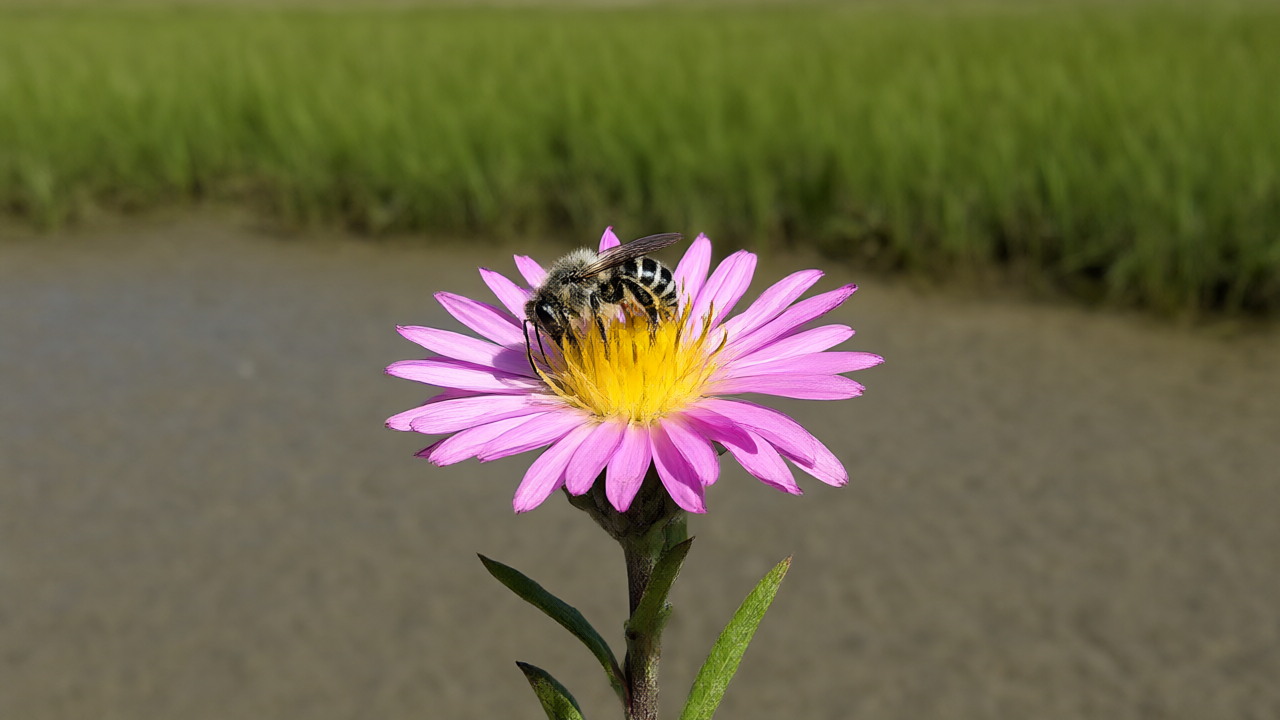
A tiny bee with distinctive zebra-like stripes has been sighted in the saltmarshes of Somerset, marking the first time this rare species has been recorded in the West Country. The discovery of the sea aster mining bee offers a promising sign for the health and recovery of local coastal ecosystems, which have undergone significant transformation over the past decade.
Naturalist Nigel Phillips made the unexpected find at Steart Marshes, describing the sighting as a "huge surprise." The bee, usually confined to the coastlines of southern and eastern England, had ventured westward, drawn by specific floral resources available in the restored wetland habitats of the region.
The presence of the sea aster mining bee is closely tied to the availability of its preferred food source: the sea aster flower. This pink and yellow bloom thrives in coastal marshes during the transition from summer to autumn. The reserve’s rich diversity of coastal wildflowers, including abundant sea aster, appears to have successfully attracted the bees to the Steart peninsula.
Steart Marshes was once farmland before being transformed into a coastal wetland through a major restoration project completed in 2014. By allowing seawater to flow back across the fields, the site was reintroduced to natural tidal processes, creating an ideal environment for salt-tolerant plants and the wildlife that depends on them.
Phillips noted seeing numerous bees and several colonial nesting areas in the dry sandy ground. He initially believed the species was restricted to salt marsh areas around the Thames estuary, making the Somerset sighting particularly notable for expanding the known range of the insect.
The Wildfowl and Wetlands Trust, which manages the nature reserve, highlighted that the discovery underscores how rare species can thrive when coastal habitats are actively restored. Of the 290 invertebrate species found in UK saltmarshes, 148 are unique to these environments, emphasizing their ecological importance.
Site manager Bay Alys Laver expressed her delight at the news, noting that while saltmarshes are often associated with large flocks of wading birds, geese, and ducks, they support a vast amount of unseen life. She credited the successful maintenance of the reserve, working in concert with local graziers, for creating conditions suitable for such rare visitors.
This finding highlights the biodiversity supported by restored coastal habitats. While separate reports indicate that muddy saltmarshes play a vital role in tackling climate change by sequestering carbon, this specific discovery primarily demonstrates the success of habitat restoration in supporting rare invertebrate species.
“A rare sea aster mining bee, typically found on England's east and south coasts, has been discovered in Somerset, signaling success in local habitat restoration.”
Sources
Reporting informed by BBC Science. This story was written by the Glob News Desk based on verified reporting and independently reviewed before publishing.
Written by
Glob News Desk
AI-assisted editorial team
Stories researched and drafted with AI assistance from verified news sources, then reviewed by a human editor before publishing.
Spotted an error, or have something to say about this story?
Tell the newsroom
Read next
Rhino siblings Markus and Mo mark first birthday with special cake
Two white rhino calves born at a UK wildlife park celebrate their first year with healthy treats, marking a significant conservation milestone.
2 min read
The Weekly Globe
One email a week with the most-read stories. Unsubscribe anytime.
Related stories
PlanetRhino siblings Markus and Mo mark first birthday with special cake
 Planet
UK Experimental Farm Reverses Bird Population Decline
 Planet
Comments
0Join the conversation — sign in to post a comment.