Rhino siblings Markus and Mo mark first birthday with special cake
Two white rhino calves born at a UK wildlife park celebrate their first year with healthy treats, marking a significant conservation milestone.
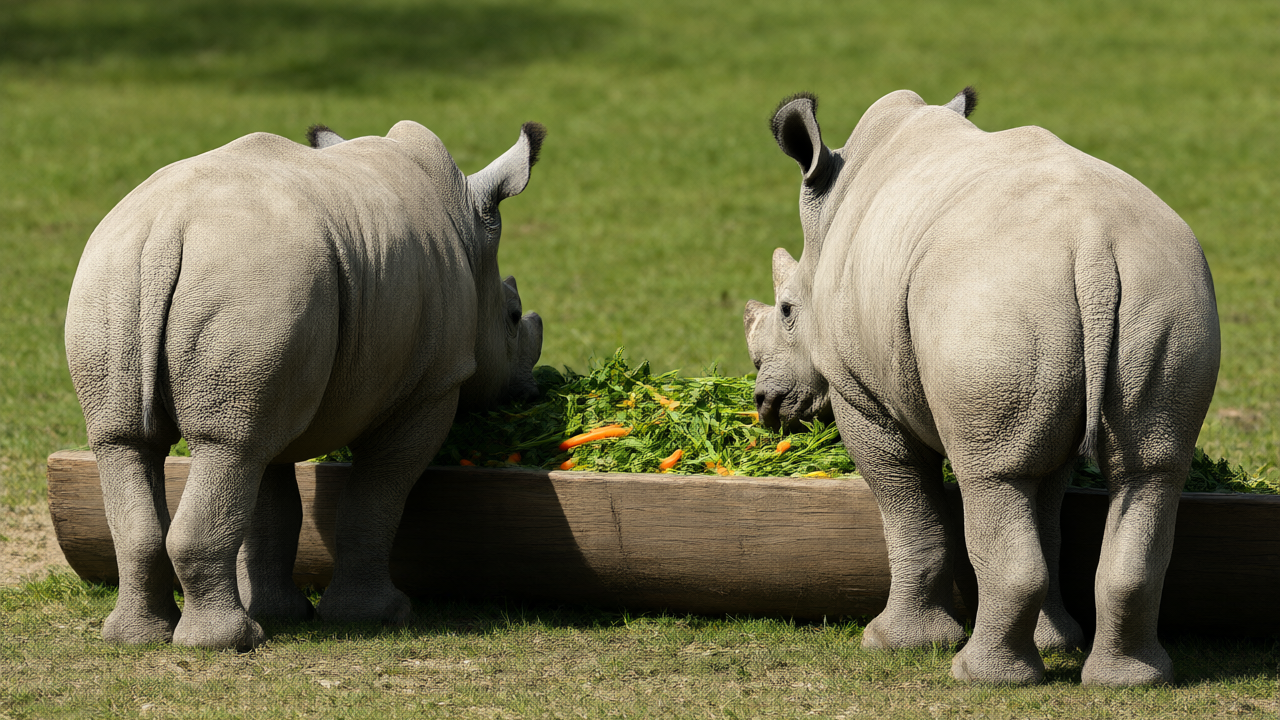
Markus and Mo, two white rhino siblings born at the Cotswold Wildlife Park near Burford, have reached a major milestone: their first birthday. To commemorate the occasion, the pair has been treated to specially prepared cakes made from pellets, carrots, and salad leaves, offering a nutritious celebration for the growing animals.
The arrival of these two calves last year was a notable event for the park. At birth, both weighed approximately 70kg (11 stone), a typical size for newborn white rhinos. Today, they have grown substantially, each weighing around 500kg (78 stone). Their growth reflects the successful care provided by the park’s veterinary and husbandry teams over the past twelve months.
The addition of Markus and Mo brought the total number of rhinos at Cotswold Wildlife Park to nine, setting a new record for the facility in its 56-year history. This increase highlights the park's role as a key center for rhino conservation and public education regarding these majestic creatures.
White rhinos face a complex conservation landscape. In the early 1900s, the species was pushed close to extinction, with fewer than 50 individuals thought to remain in Africa. Decades of protection and breeding programs have since helped populations recover, making white rhinos the most numerous of the five rhino species today.
Despite this recovery, conservationists emphasize that vigilance remains critical. Poaching for horns and habitat loss continue to pose significant threats to rhino populations across Africa. Parks like Cotswold Wildlife Park play an essential role in maintaining genetic diversity and supporting broader conservation efforts through research and public engagement.
The park’s success in raising Markus and Mo demonstrates the effectiveness of modern captive breeding and rearing techniques. These methods are often used to bolster wild populations or provide insurance against catastrophic events in natural habitats. The siblings’ healthy development serves as a testament to the dedication of the staff involved in their daily care.
As they continue to grow, Markus and Mo will likely become central figures in the park’s educational programs. Visitors can observe their behavior and learn about the challenges facing rhinos in the wild. Such interactions help foster a connection between the public and wildlife, encouraging support for conservation initiatives.
The celebration of their first birthday also underscores the long-term commitment required to maintain viable rhino populations. While white rhinos are currently the most abundant species, their status is fragile compared to historical levels. Continued effort is needed to ensure that numbers remain stable and that threats are mitigated effectively.
For now, Markus and Mo enjoy their special cake treat, a sweet end to a year of rapid growth and development. Their story at Cotswold Wildlife Park is one of hope and resilience, reflecting broader successes in rhino conservation while reminding us of the ongoing work required to protect these iconic animals for future generations.
“Two white rhino calves born at a UK wildlife park celebrate their first year with healthy treats, marking a significant conservation milestone.”
Sources
Reporting informed by BBC Science. This story was written by the Glob News Desk based on verified reporting and independently reviewed before publishing.
Written by
Glob News Desk
AI-assisted editorial team
Stories researched and drafted with AI assistance from verified news sources, then reviewed by a human editor before publishing.
Spotted an error, or have something to say about this story?
Tell the newsroom
Read next
UK Experimental Farm Reverses Bird Population Decline
A Leicestershire demonstration farm has boosted local bird numbers by 145% since 1992 through sustainable planting and habitat management.
2 min read
The Weekly Globe
One email a week with the most-read stories. Unsubscribe anytime.
Related stories
PlanetUK Experimental Farm Reverses Bird Population Decline
 Planet
Rare Beetle Thought Extinct in Wales Rediscovered After 60 Years
 Planet
Comments
0Join the conversation — sign in to post a comment.