UK Experimental Farm Reverses Bird Population Decline
A Leicestershire demonstration farm has boosted local bird numbers by 145% since 1992 through sustainable planting and habitat management.
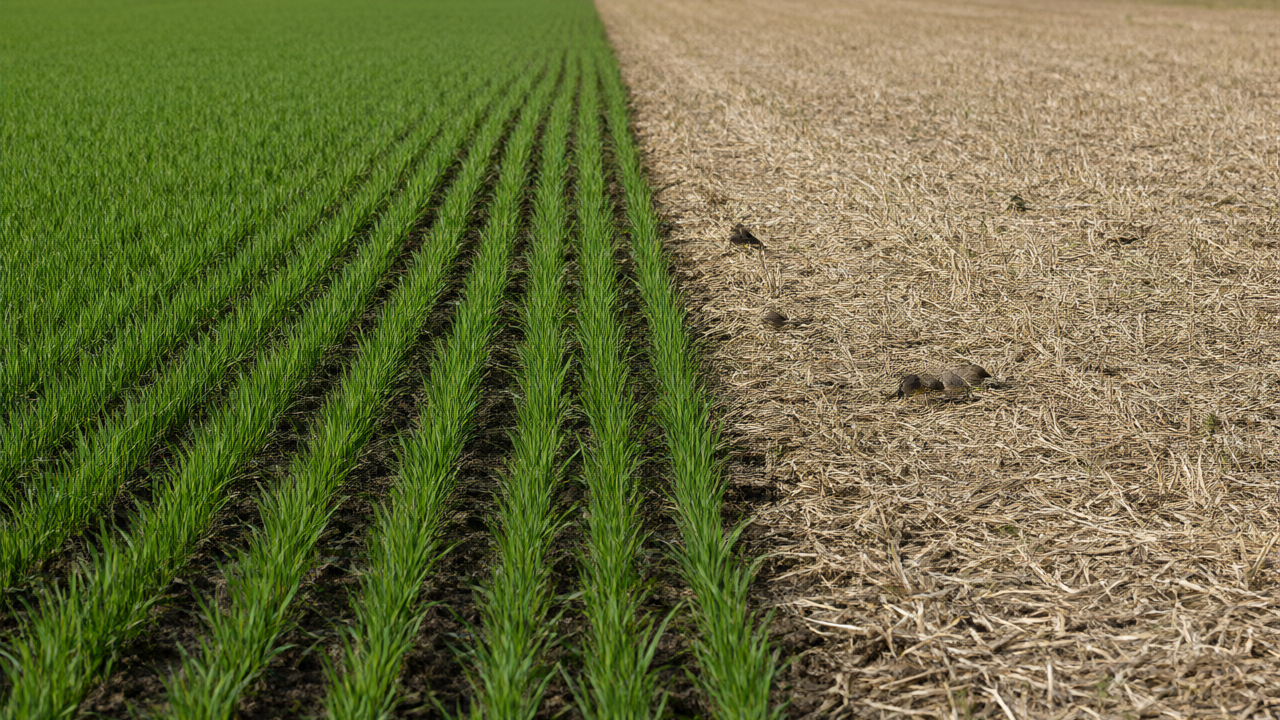
In the rolling fields of Leicestershire, a unique agricultural experiment is challenging the narrative of inevitable ecological loss. The Allerton Project, a working farm and research center located on the border with Rutland, has successfully reversed the sharp decline in farmland bird populations that has plagued much of the United Kingdom. By integrating sustainable farming practices with active wildlife conservation, the site offers a tangible blueprint for how agriculture can coexist with, and even support, biodiversity.
The contrast between conventional and experimental methods is starkly visible within the same field. Farmer Alastair Leake, director of the project, points to two distinct areas: one ploughed before planting winter wheat, resulting in neat rows of upturned soil, and another where crops were drilled directly into the earth amidst a messy carpet of previous harvest residue. Observations show that birds consistently avoid the ploughed side, where seeds and insects are buried, preferring the "trashy" side where food sources remain accessible on the surface.
This approach has yielded remarkable results. Since monitoring began in 1992, farm bird abundance at Allerton has risen by 145 percent. This stands in direct opposition to national trends, which have seen a 23 percent decline in the same period. Species such as song thrushes, blackbirds, and linnets are particularly prevalent, reaching their highest recorded levels at the site. Leake emphasizes that these are not overnight results but the product of decades of rigorous testing and adaptation.
Central to this success is the creation of dedicated feeding zones known as "bird tables." These are channels of specific seed mixes, including kale, teasel, sorghum, and millet, designed to provide sustenance during the critical "hungry gap" of January, February, and March. Ensuring birds survive this winter scarcity allows them to maintain the energy reserves necessary for breeding in the spring. Leake notes that goldfinches, in particular, thrive on the teasel planted in these strips.
Complementing the feeding zones are "beetle banks," strips of uncultivated land planted with long, tussock-forming perennial grasses. As the grass dies back annually, it forms a thick fibrous blanket where beetles hibernate. In spring, these beetles emerge to consume crop pests, reducing the need for pesticide spraying. This natural pest control not only protects the crops but also provides a vital insect food source for the surrounding bird populations.
The project also employs innovative feeding strategies adapted from domestic gardening. Large barrels filled with wheat are placed in fields to attract farmland birds during winter months. While similar to backyard bird feeders, this method scales the practice to an agricultural level, ensuring that wild species have reliable access to calories when natural foraging becomes difficult.
Predator management remains a sensitive but necessary component of the strategy. Foxes and crows can prey on eggs and chicks, hindering the recovery of ground-nesting species. Allerton’s approach targets predator control primarily during the nesting season, aiming to reduce pressure on vulnerable birds at their most critical life stage. Leake describes this as a managed, humane reduction of threats rather than widespread eradication.
The ultimate goal of the Allerton Project is dissemination. Rather than presenting itself as an exclusive nature reserve, the 320-hectare site frequently hosts farmers, policymakers, and business leaders to demonstrate that these techniques are replicable. Leake insists that the methods are practical for ordinary farms, provided there are appropriate incentives. With the right support structures, he argues, there is no reason why this robust recipe for nature recovery cannot be adopted across the entire country.
“A Leicestershire demonstration farm has boosted local bird numbers by 145% since 1992 through sustainable planting and habitat management.”
Sources
Reporting informed by Guardian Env. This story was written by the Glob News Desk based on verified reporting and independently reviewed before publishing.
Written by
Glob News Desk
AI-assisted editorial team
Stories researched and drafted with AI assistance from verified news sources, then reviewed by a human editor before publishing.
Spotted an error, or have something to say about this story?
Tell the newsroom
Read next
Rhino siblings Markus and Mo mark first birthday with special cake
Two white rhino calves born at a UK wildlife park celebrate their first year with healthy treats, marking a significant conservation milestone.
2 min read
The Weekly Globe
One email a week with the most-read stories. Unsubscribe anytime.
Related stories
PlanetRhino siblings Markus and Mo mark first birthday with special cake
 Planet
Rare Beetle Thought Extinct in Wales Rediscovered After 60 Years
 Planet
Comments
0Join the conversation — sign in to post a comment.