NASA Seeks New Astronauts for Moon Base and Mars Missions
The US space agency has opened applications for a new class of astronauts to help build a lunar base and pioneer missions to Mars.
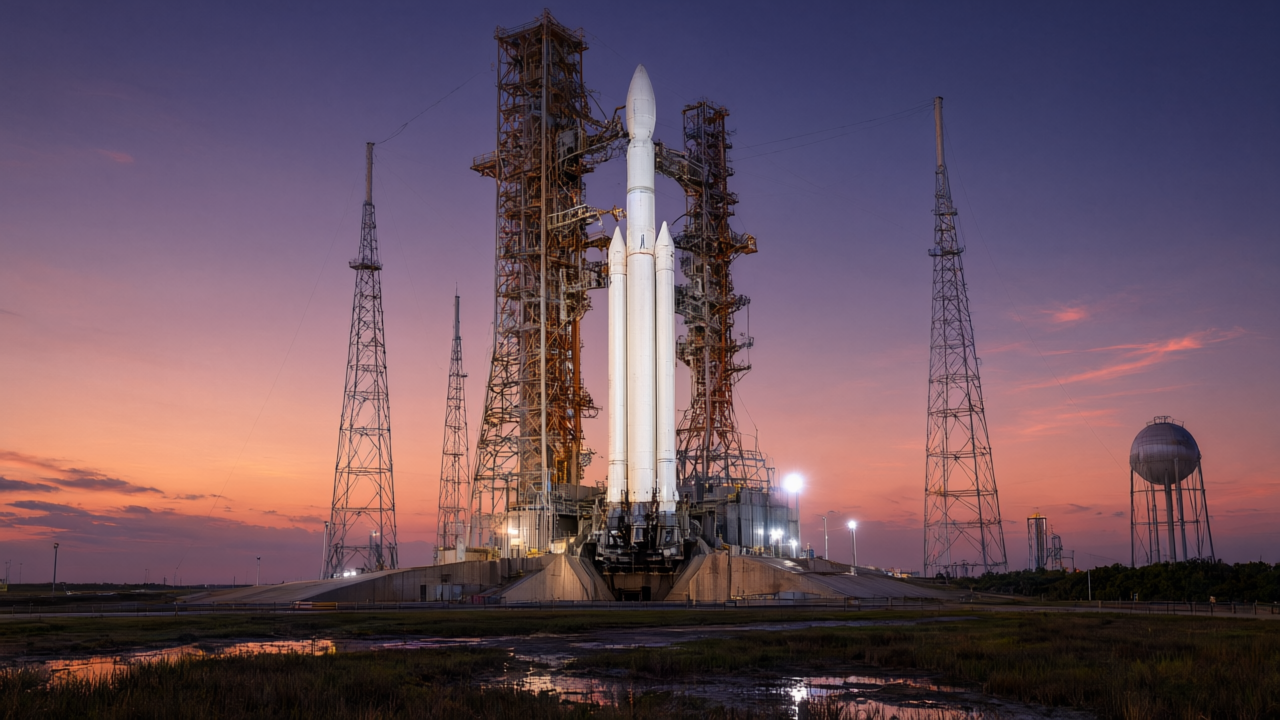
NASA has launched a recruitment drive for a new generation of astronauts, seeking explorers capable of living and working on the moon. The callout aims to identify individuals who can help shape humanity’s future in space as the agency constructs a permanent lunar base and plans the first crewed missions to Mars.
The announcement was made on Saturday during an air show at Kennedy Space Center, which highlighted advances in aviation, technology, and lunar exploration. NASA Administrator Jared Isaacman emphasized that this is an extraordinary period to join the astronaut corps, noting that selected candidates could walk on the moon, live at the Moon Base, and pioneer the systems needed to carry crews to Mars.
Successful applicants will be part of the latest expansion of the Artemis program. NASA expects to make its final selection in late 2027, after which the new class will begin training. This follows the agency's previous recruitment cycle in 2024, which resulted in the acceptance of 10 new astronauts from more than 8,000 applicants in September 2025.
Scott Tingle, chief astronaut and chair of the Astronaut Selection Board at NASA’s Johnson Space Center in Houston, described the role as more than a career opportunity. He stated it is a chance to join a legacy of explorers who have pushed the boundaries of discovery and play a pivotal role in missions that will define humanity’s presence in space.
Since the 1960s, NASA has selected 370 people to train as astronaut candidates for increasingly complex missions. The agency currently maintains a corps of 32 active astronauts. Recent leadership discussions have outlined ambitions to return Americans to the moon in 2028, with both SpaceX and Blue Origin intending to support crewed lunar landing efforts.
To apply, candidates must be US citizens and hold a master’s degree in science, technology, engineering, or mathematics, possess medical qualifications, have pilot training, or have completed two years of work toward a relevant doctoral program. Additionally, all applicants are required to have three years of related professional experience.
Specific requirements exist for pilots applying to the corps. They must demonstrate either 750 hours of pilot-in-command time in a high-performance jet, 1,500 total flight hours in another fixed-wing aircraft, or 1,000 total flight hours in a rotary-wing aircraft. These stringent criteria ensure that candidates possess the technical expertise necessary for deep space exploration.
Applications are due by 11:59 pm ET on Thursday, December 3. The recruitment process reflects NASA’s broader strategy to establish a sustainable human presence on the moon, serving as a stepping stone for deeper space exploration. The agency continues to rely on private sector partners like SpaceX and Blue Origin to facilitate these ambitious goals.
“The US space agency has opened applications for a new class of astronauts to help build a lunar base and pioneer missions to Mars.”
Sources
Reporting informed by Guardian Science. This story was written by the Glob News Desk based on verified reporting and independently reviewed before publishing.
Written by
Glob News Desk
AI-assisted editorial team
Stories researched and drafted with AI assistance from verified news sources, then reviewed by a human editor before publishing.
Spotted an error, or have something to say about this story?
Tell the newsroom
Read next
New Blood Pressure Drug Shows Potential for Long-Term Cure
A new hypertension medication, baxdrostat, has stunned doctors by reversing high blood pressure for up to two years after treatment stops.
3 min read
The Weekly Globe
One email a week with the most-read stories. Unsubscribe anytime.
Related stories
ScienceNew Blood Pressure Drug Shows Potential for Long-Term Cure
 Science
The Secret to Better Conversations Is 'Pink Noise'
 Science
Comments
0Join the conversation — sign in to post a comment.