Fossilized Red Blood Cells Found in 115-Million-Year-Old Dinosaur Bone
Scientists claim to have discovered fossilized red blood cells and heme traces in an Aratasaurus dinosaur, challenging long-held beliefs about organic preservation.
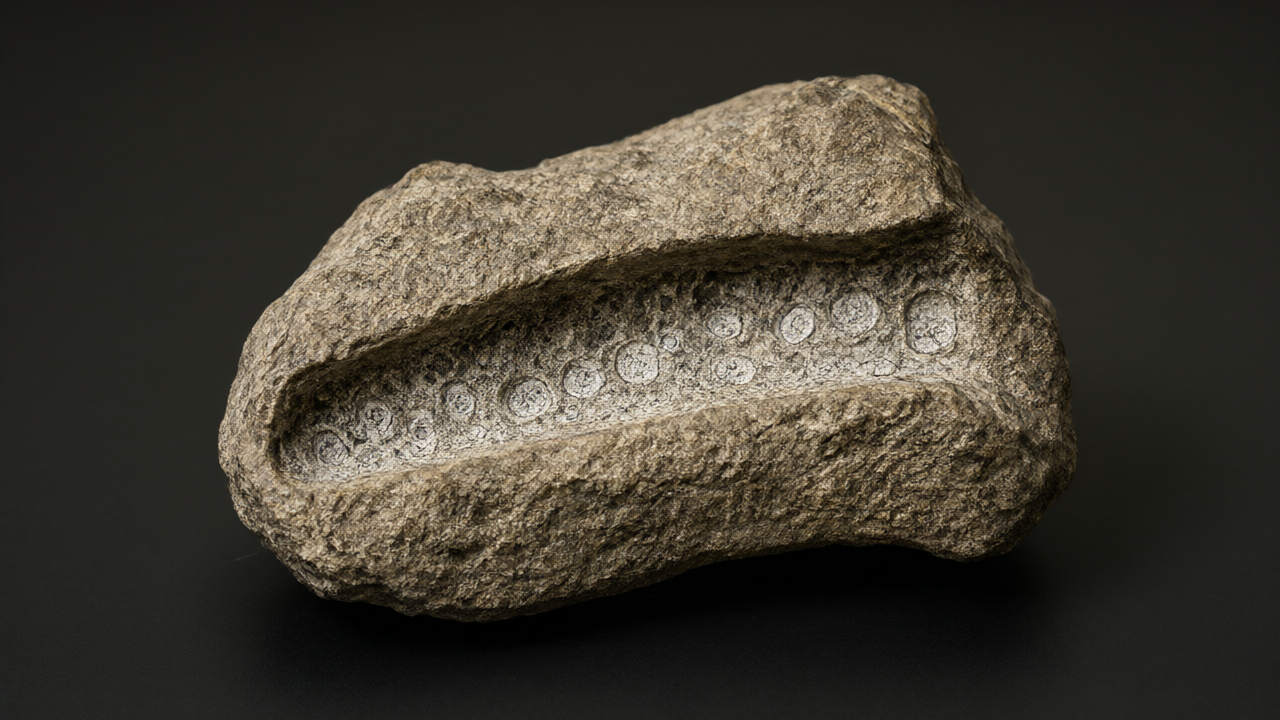
Paleontologists analyzing the bones of a dinosaur that lived 115 million years ago have reported what appear to be fossilized red blood cells, a discovery that could fundamentally alter our understanding of how biological materials survive deep time. The findings, derived from the hind leg bones of Aratasaurus, a small meat-eating species native to what is now northeastern Brazil, reveal traces of heme, the organic compound responsible for the crimson color of blood and its ability to carry oxygen.
The research team, led by Professor Kliti Grice at Curtin University in Western Australia, examined samples from a fossil discovered in a mine in 2008 and currently held at the National Museum of Brazil. Using electron microscopy, they identified small, round structures within fine channels where blood vessels once ran. These structures closely resemble modern red blood cells. Subsequent chemical tests confirmed the presence of heme and its breakdown products, alongside amino acid building blocks for collagen, a key protein in connective tissues.
"We are seeing a mineral and molecular echo of the dinosaur’s original biology," Professor Grice stated. She emphasized the uniqueness of the find, noting that fossilized red blood cells with distinct chemistry related to heme have never been found in situ in any fossil, let alone a dinosaur. The study, which details these extraordinary preservation claims, has been published in the Proceedings of the National Academy of Sciences.
Such claims remain controversial within the scientific community. Biological tissues and molecules typically break down rapidly after death, leaving little to no trace in ancient fossils over millions of years. If the structures are indeed fossilized red blood cells, it would open entirely new avenues for investigation, allowing scientists to study dinosaur blood composition, metabolism, and even their activity levels with unprecedented detail.
Professor Mary Schweitzer of North Carolina State University, a pioneer in discovering soft tissue remnants in dinosaur fossils, expressed skepticism regarding the identification of the structures as red blood cells. She noted that dinosaur red blood cells should possess a "nuclear bulge," making them appear dome-like on both sides. The structures observed by Grice’s team were concave, suggesting they might be something else entirely. However, Schweitzer acknowledged the significance of the chemical evidence, particularly the detection of heme and collagen amino acids.
Grice proposed a mechanism for this exceptional preservation: a manganese compound called hausmannite may have stabilized the blood cells prior to fossilization. This process likely helped preserve the amino acids as well. The presence of such minerals offers a plausible explanation for how delicate organic matter could survive for over a century million years, defying conventional wisdom that endogenous organics disappear within a million years or less.
The discovery raises intriguing questions about other potential biological material lurking in museum collections worldwide. Grice urged extreme caution, clarifying that her work does not imply that large biological molecules like proteins or DNA survive in ancient fossils. "Any extraordinary claim needs extraordinary analytical evidence," she said, stressing that the aim is not to find fictional Jurassic Park DNA but to determine how much genuine molecular information deep time can actually preserve.
As technological approaches to palaeontological specimens become more routine, the conventional limits of fossil preservation are being routinely challenged. Grice suggested that extraordinary molecular information may already be sitting in museum collections around the world, waiting for researchers to ask new questions of old fossils. This study marks a significant step toward unlocking those secrets, provided the findings withstand rigorous peer review and further scrutiny.
“Scientists claim to have discovered fossilized red blood cells and heme traces in an Aratasaurus dinosaur, challenging long-held beliefs about organic preservation.”
Sources
Reporting informed by Guardian Science. This story was written by the Glob News Desk based on verified reporting and independently reviewed before publishing.
Written by
Glob News Desk
AI-assisted editorial team
Stories researched and drafted with AI assistance from verified news sources, then reviewed by a human editor before publishing.
Spotted an error, or have something to say about this story?
Tell the newsroom
Read next
Why Charisma Is a Red Flag for Manipulation
Psychology insights suggest that smooth talkers often exploit evolutionary vulnerabilities, teaching us how to defend against charismatic deception.
2 min read
The Weekly Globe
One email a week with the most-read stories. Unsubscribe anytime.
Related stories
ScienceWhy Charisma Is a Red Flag for Manipulation
 Science
Seabirds Suffer Jet Lag When Migrating
 Science
Comments
0Join the conversation — sign in to post a comment.