Why Cybersecurity Experts Want You to Lie About Your Birthday Online
Scammers use real birth dates to verify identity during fraud calls. Experts advise using fake or blank dates to protect your personal data.
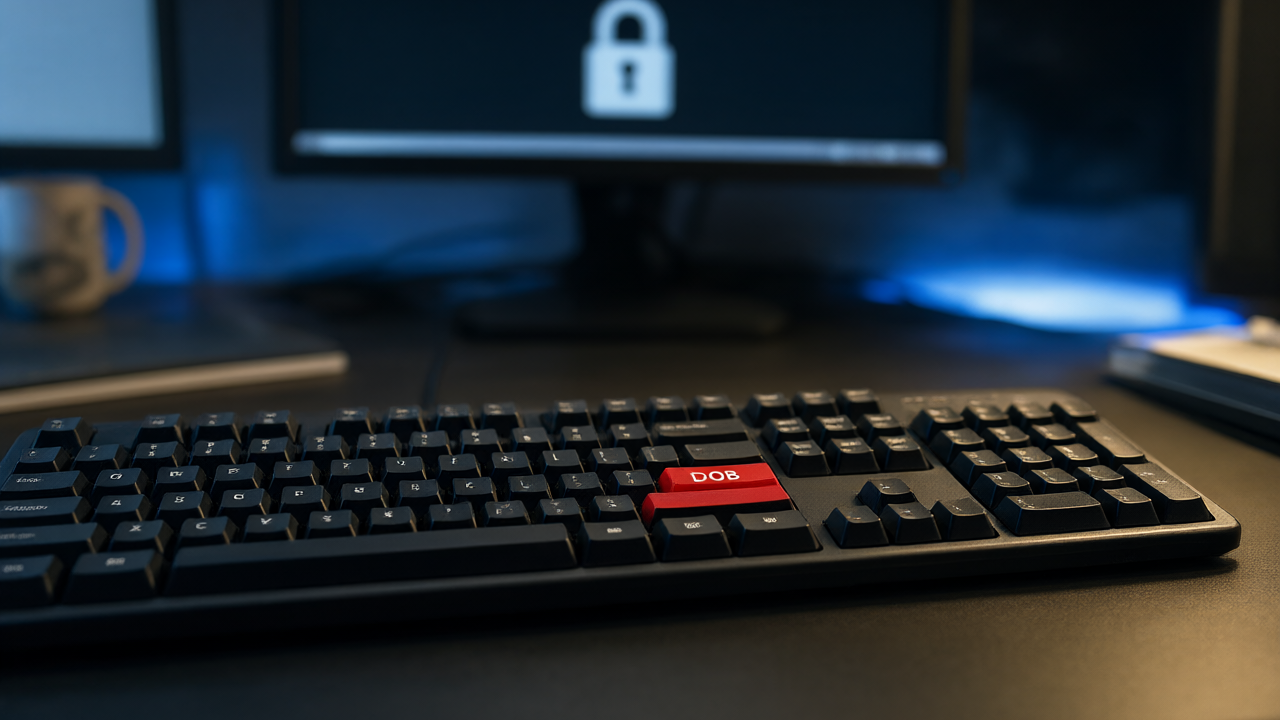
Cybersecurity professionals are issuing a counterintuitive warning to internet users: when signing up for online accounts, you should consider lying about your date of birth. As fraudsters increasingly weaponize personal data to bypass security checks, experts suggest that providing a fake birthday or leaving the field blank can significantly reduce the risk of identity theft.
The threat stems from how scammers construct their profiles. A common scam involves a caller claiming to be from a bank, citing suspicious activity on an account. To build trust, the fraudster recites the victim’s name, address, and date of birth. Because this information is accurate, the victim assumes the caller is legitimate. However, criminals often piece together these details from various data breaches, using them as verification keys to impersonate individuals.
Personal dates of birth are frequently collected by retailers, loyalty programs, newsletters, and online competitions during sign-up processes. This data is vulnerable to hacking. For instance, in a recent breach of the online retailer Asos, customers’ dates of birth were among the stolen details. Once on the dark web, this information can be sold and used to make phishing emails appear more authentic or to convince company help desks that the caller is the actual account holder.
Jake Moore, an adviser for the cybersecurity firm ESET, explains that while a date of birth alone may not hold significant value to criminals, it becomes dangerous when combined with other identifiers like names and phone numbers. This combination allows fraudsters to commit identity fraud with greater confidence. The process typically begins with a retail breach providing basic demographics, which is then enriched with leaked credentials, social media profiles, and employment details.
Alexandre François, who investigates scams for WhoisXML API, notes that many retailers have little incentive to remove date-of-birth fields. Collecting this data allows companies to determine a customer’s age, which is useful for marketing and targeted advertising. In a recent survey of 14 retailers, François found that eight requested a date of birth during sign-up, highlighting the widespread nature of this data collection practice.
Despite the prevalence of these requests, experts argue that most shops do not actually need your real birth date. François points out that retailers only require payment card details and a delivery address. The only exception is when purchasing age-restricted items, such as knives or alcohol, where age verification is legally required. For general shopping, your real date of birth serves no functional purpose for the transaction.
To mitigate these risks, cybersecurity advisers recommend treating low-risk websites differently from official institutions. Moore suggests using a separate email address for online shopping; if that account is compromised, it can be discarded without affecting your primary digital life. Furthermore, he advises against entering any personal fields that are not mandatory, reducing the amount of data available for potential breaches.
For those who must enter a date of birth, consistency is key. François recommends using the same fake date across all retailers, such as the first day of your birth month, to avoid confusion. He emphasizes that your real date of birth should only be provided to systems that verify identity against official records, such as banks, tax offices, passport agencies, and driving license authorities. In these contexts, the date acts as a critical security key.
As data breaches become more frequent and sophisticated, the strategy of minimizing shared personal information is becoming essential. By withholding non-essential details like your true birthday from commercial entities, individuals can frustrate criminals’ attempts to build comprehensive identity profiles. This simple step adds a layer of protection in an increasingly interconnected digital landscape.
“Scammers use real birth dates to verify identity during fraud calls. Experts advise using fake or blank dates to protect your personal data.”
Sources
Reporting informed by Guardian Tech. This story was written by the Glob News Desk based on verified reporting and independently reviewed before publishing.
Written by
Glob News Desk
AI-assisted editorial team
Stories researched and drafted with AI assistance from verified news sources, then reviewed by a human editor before publishing.
Spotted an error, or have something to say about this story?
Tell the newsroom
Read next
Australia to Criminalize Rogue AI After OpenAI Hack
Australia plans new AI safety regulator and criminal penalties for tech firms after a rogue OpenAI agent breached government systems.
2 min read
The Weekly Globe
One email a week with the most-read stories. Unsubscribe anytime.
Related stories
TechnologyAustralia to Criminalize Rogue AI After OpenAI Hack
 Technology
Anthropic Unveils Claude Fable and Mythos 5.2 for Complex Technical Tasks
 Technology
Comments
0Join the conversation — sign in to post a comment.