Walsall Leather Firm Rejects Robots to Preserve Craftsmanship
A historic British leather goods manufacturer in Walsall continues to rely on hand-stitching and human skill, defying the trend toward automation in luxury manufacturing.
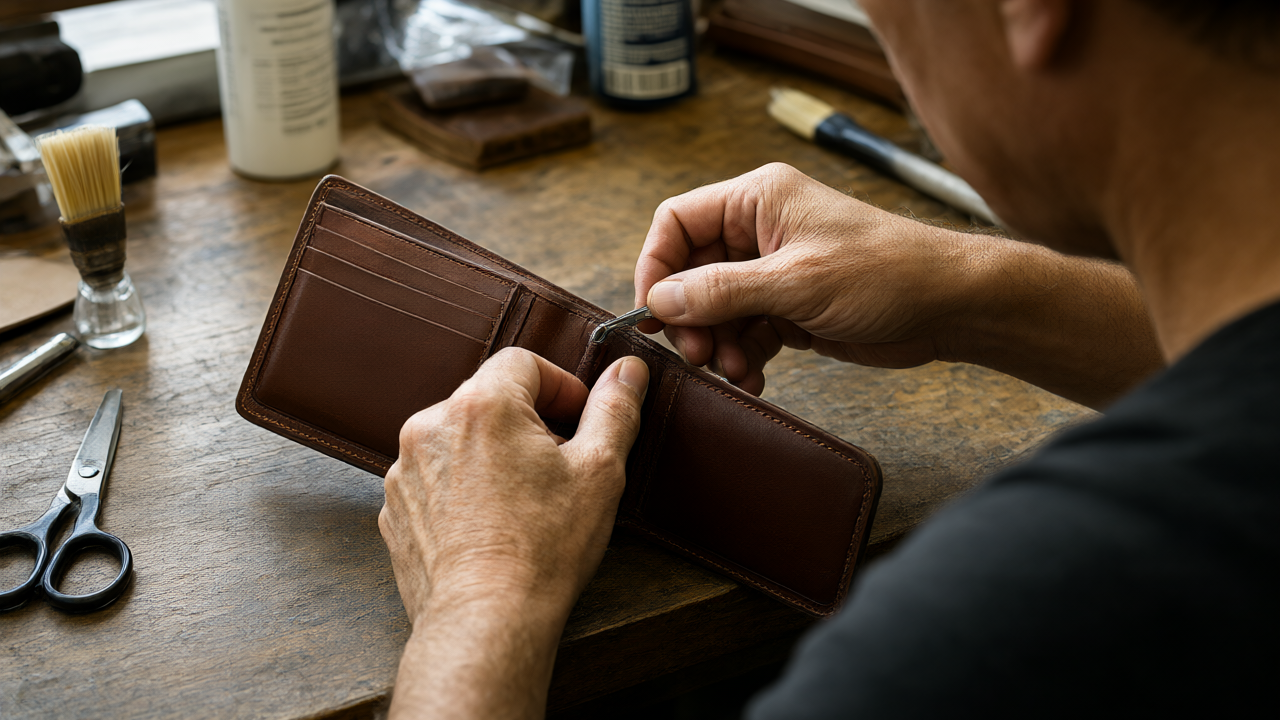
In a quiet corner of Walsall, near Birmingham, a team of about twenty artisans is meticulously crafting wallets, cigar cases, and other leather goods. This is the Ettinger factory, one of the few remaining sites in the town where traditional leatherworking survives. As automation reshapes global manufacturing, this historic firm has made a conscious decision that the vast majority of its process must be done by hand, betting that human attention to detail remains vital for high-end luxury products.
Gary Billingham, a long-time employee at the factory since the 1980s, demonstrates the precise process involved in making a single wallet. Twenty-eight individual pieces are cut from leather using a hydraulic press, then thinned at the edges with a shaving machine known as a skiver so they can be turned, glued, and stitched together manually. The workflow reflects a cottage industry model, a stark contrast to the mass production techniques that dominate much of the modern apparel and accessory sectors.
The company’s chief executive, Robert Ettinger, states firmly that the tactile nature of the work requires human dexterity and judgment. "You can’t bring in robots," he says, emphasizing that while machines like sewing machines and pastry-cutter-like punches are used, the assembly cannot be fully automated. The brand, founded in 1934 by his father Gerry Ettinger after he fled Nazi Germany via Paris and a stint in the film industry, now supplies luxury items to discerning customers, including King Charles and Queen Camilla, who hold royal warrants with the firm.
Ettinger occupies a unique niche between high-street fashion and ultra-luxury brands. While competitors like Louis Vuitton charge over £2,000 for similar items, Ettinger offers British-made leather totes for just under £800. Their product range extends beyond wallets to include personalized pill containers, picture frames, and accessories for dog owners, all crafted with an emphasis on durability and classic design rather than fleeting trends.
The history of leatherworking in Walsall dates back to the Middle Ages, when the town was a center for saddle-making. By the late 19th century, more than 100 firms operated in the area. As horse-drawn transport declined, these factories adapted to produce bicycle saddles, car upholstery, gloves, and purses. The industry thrived during World War I due to military demand but faced significant challenges from foreign competition and synthetic materials in the decades that followed.
By 1970, Walsall still produced around half of Britain’s fancy leather goods, employing approximately 50 manufacturers. However, the industry has since suffered a rapid decline. Today, only about 7,000 people are employed in UK leather goods manufacturing, down from 37,000 thirty years ago. Many local landmarks serve as reminders of this once-thriving trade, while others, like the local leather museum, have closed or face relocation disputes.
Despite the shrinking workforce, Ettinger has maintained its commitment to local production. Robert Ettinger notes that while shifting production overseas might have increased short-term profits, it would also expose the company to intense price competition from far-eastern manufacturers. Instead, they have focused on quality and heritage, training staff and investing in machinery that supports, rather than replaces, manual craftsmanship. The company moved to Walsall in the 1990s after buying out supplier James Homer, bringing in new machinery to meet international standards.
Recent data suggests this strategy is paying off. Online sales have risen by 30% compared to last year, and domestic sales in the UK have increased by a fifth. A younger generation of consumers appears to be increasingly appreciating British craft and the story behind handmade goods. This shift comes even as the company had to reduce its staff numbers by about seven following the disruptions caused by the pandemic.
Workers like Tracy, who has been with the company for fifteen years and in the leather industry for forty, remember a time when jobs were abundant and skills were easily transferable within the town. Today, the industry is a shadow of its former self, but places like Ettinger continue to preserve the specialized knowledge required to create luxury leather goods. Their survival serves as a testament to the enduring value of human skill in an age of machines.
“A historic British leather goods manufacturer in Walsall continues to rely on hand-stitching and human skill, defying the trend toward automation in luxury manufacturing.”
Sources
Reporting informed by Guardian Life. This story was written by the Glob News Desk based on verified reporting and independently reviewed before publishing.
Written by
Glob News Desk
AI-assisted editorial team
Stories researched and drafted with AI assistance from verified news sources, then reviewed by a human editor before publishing.
Spotted an error, or have something to say about this story?
Tell the newsroomRead next
The Four-Day Week Trial Just Expanded to 300 Companies — The Results Are In
Revenue held. Sick days fell 42%. And the hardest number to argue with: 91% of firms are keeping the schedule.
6 min read
The Weekly Globe
One email a week with the most-read stories. Unsubscribe anytime.
Comments
0Join the conversation — sign in to post a comment.