Google's Space AI Satellite Writes Its First Haiku
Google’s Project Suncatcher satellite successfully booted its onboard AI chips in orbit, generating a poem to prove on-orbit computing viability.
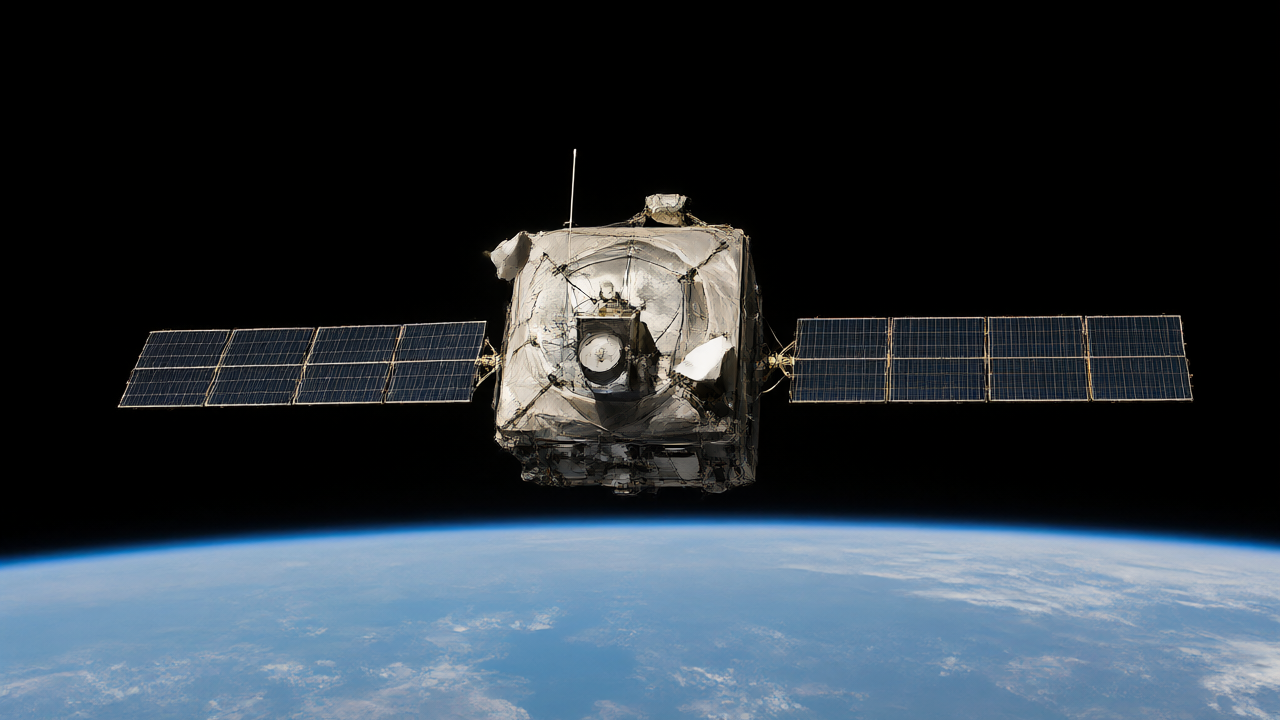
Google has achieved a significant milestone in space-based artificial intelligence. The company announced that its Project Suncatcher satellite, launched earlier this month, has successfully generated its first response from orbit. In a blog post published on Friday, Google confirmed that the satellite’s Tensor Processing Units (TPUs) were successfully booted, allowing an onboard Gemma 4 model to execute a prompt and compose a haiku about being in space.
This event marks the first time the AI chip-equipped satellite has produced output while in orbit. The successful generation of text demonstrates that computational tasks can be performed by AI models outside Earth's atmosphere. Google noted that the test also included attempts at other space-themed limericks and telemetry prompts, further validating the system's responsiveness.
Project Suncatcher is an experimental initiative designed to explore the feasibility of placing AI data centers in space. The project aims to pave the way for more advanced configurations, with Google stating that verifying reliable TPU execution in space is a critical step toward future milestones.
The immediate next phase involves rigorous testing of the hardware under harsh orbital conditions. Google plans to conduct a series of tests to evaluate how the TPUs perform under thermal stress and radiation exposure. These environmental factors are major challenges for electronic equipment in space, and ensuring the chips can withstand them is essential for long-term operational reliability.
Success in these upcoming tests will support Google’s broader goal of deploying twin interconnected satellites by 2027. This expansion would allow for more complex distributed computing architectures in orbit. The current single-satellite test serves as a proof of concept, demonstrating that the foundational technology is functional before scaling up to a more sophisticated networked system.
As launch costs decrease and satellite technology advances, the integration of high-performance computing modules into spacecraft is becoming increasingly viable. This development highlights the converging trends of artificial intelligence and aerospace engineering.
As Google continues its testing regimen, the tech community will be watching closely to see if the satellite can maintain stability over extended periods. If successful, Project Suncatcher could redefine how we utilize orbital assets for computational purposes.
“Google’s Project Suncatcher satellite successfully booted its onboard AI chips in orbit, generating a poem to prove on-orbit computing viability.”
Sources
Reporting informed by The Verge. This story was written by the Glob News Desk based on verified reporting and independently reviewed before publishing.
Written by
Glob News Desk
AI-assisted editorial team
Stories researched and drafted with AI assistance from verified news sources, then reviewed by a human editor before publishing.
Spotted an error, or have something to say about this story?
Tell the newsroom
Read next
Starbucks Tests AI to Personalize Drive-Thru Experience
Starbucks CEO Brian Niccol reveals plans to use AI for recognizing customers and displaying personalized menus at drive-thrus starting in 2027.
2 min read
The Weekly Globe
One email a week with the most-read stories. Unsubscribe anytime.
Related stories
TechnologyStarbucks Tests AI to Personalize Drive-Thru Experience
 Technology
Apple Brings AI Tools to China with iOS 27.3 Update
 Technology
Comments
0Join the conversation — sign in to post a comment.